


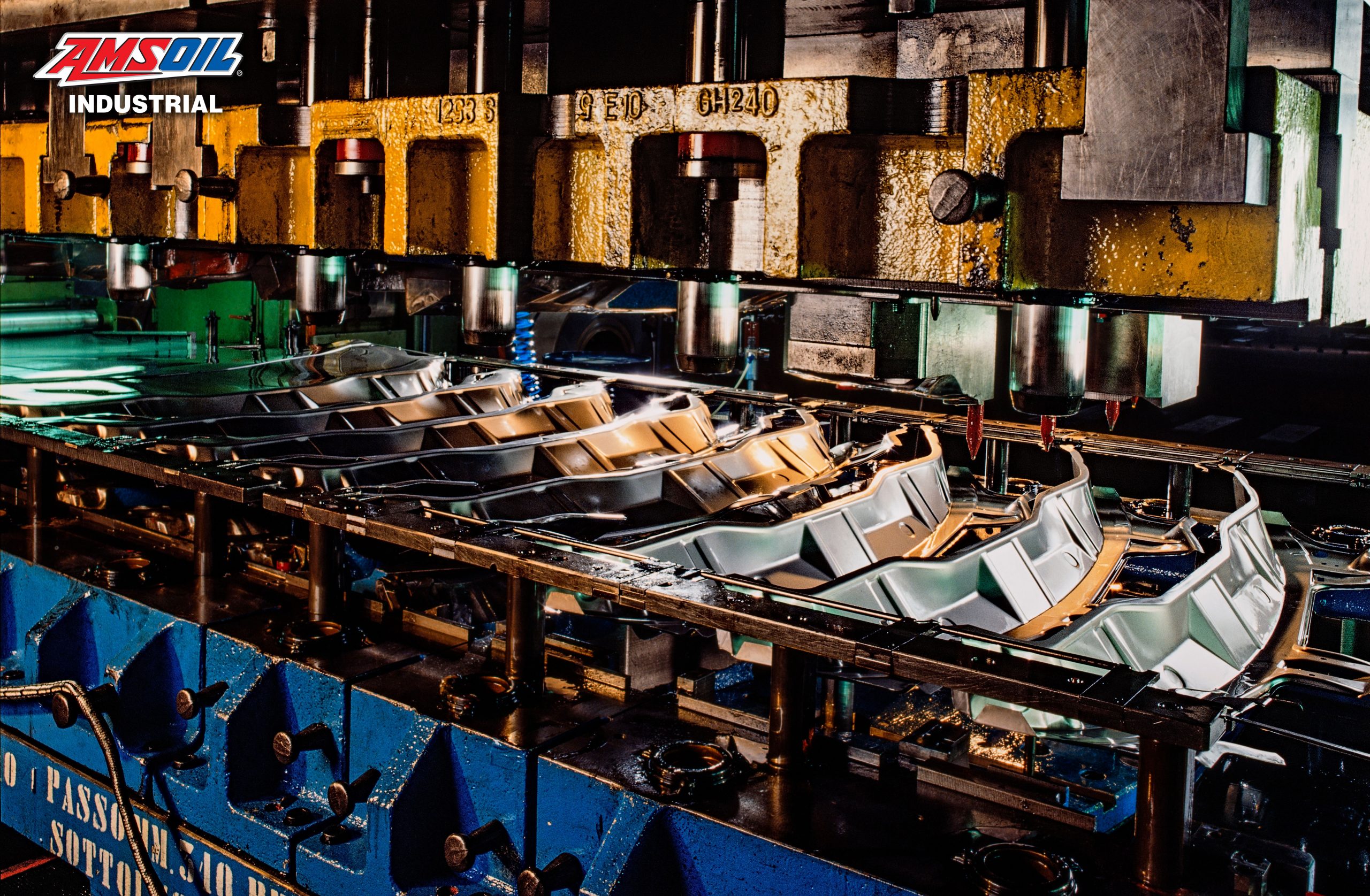
Why the Right Drawing and Stamping Fluid Matters
In drawing and stamping applications, fluid choice affects more than lubrication. It can influence tool life, part quality, cleaning time and total process cost. Stamping often prioritizes speed, part release and downstream cleanliness. Drawing places more demand on metal flow, film strength and surface protection. The right fluid depends on what your operation needs most.
There is no universal best drawing and stamping fluid. The right choice depends on the tradeoffs your process can accept, whether that is maximum lubricity, cleaner parts, easier fluid management or lower total cost.
What Drawing and Stamping Fluids Do in Metalforming Operations
At a technical level, drawing and stamping fluids support several critical functions across both processes. In stamping, that can mean helping the material shear cleanly, release from the die and move through the press with less friction. In deep drawing, the fluid also needs to support controlled metal flow as the blank stretches into a deeper shape under higher contact pressure.
• Reduce friction and wear at the tool-workpiece interface.
• Control heat generated during forming.
• Improve material flow and prevent tearing.
• Protect metal surfaces from corrosion.
• Assist with debris removal and part release.
Additive chemistry also matters. Extreme-pressure and anti-wear additives help protect metal surfaces under load, reduce galling and extend tool life in severe forming conditions.
The Five Main Types of Drawing and Stamping Fluids
1. Straight Oil: Maximum Protection for Severe Applications
Straight oils deliver the highest lubricity and film strength, making them ideal for deep drawing and heavy forming.
What you gain:
• Strong anti-wear protection.
• Reduced friction under high loads.
What you accept:
• Higher residues.
• Higher die temperatures.
• Increased cleaning requirements.
Choose straight oil when parts require ultimate lubricity for forming, especially for deep drawing applications and more difficult forming materials. In these applications, straight oil provides the film strength that helps reduce galling, protect tooling and improve consistency. The tradeoff is more residue and cleanup, but many plants may accept that to reduce scrap and unplanned maintenance.
2. Water-Based Fluids: Clean Operation for Light Stamping
Water-based fluids provide excellent cooling and produce cleaner parts.
What you gain:
• Minimal residue.
• Easier downstream processing.
What you give up:
• Lower lubricity in demanding applications.
Choose water-based fluids when cleanliness matters more than maximum lubricity. They fit lighter stamping and finishing-focused lines where less residue can simplify cleanability, coating and overall housekeeping. The tradeoff is lower protection in more severe applications.
3. Water-Dilutable Fluids: Balanced Performance Across Operations
Water-dilutable formulations provide a middle ground between lubricity and cleanliness.
What you gain:
• Flexibility across materials and processes.
• Balanced lubrication and cleanliness.
What you give up:
• May not match extreme performance of straight oils.
Water-dilutable fluids fit plants that need one fluid for a range of jobs. They provide a practical balance of lubricity, cleanliness and flexibility across mixed materials and moderate forming conditions. The tradeoff is that they may not match straight oil in the most severe applications.
4. Solvent-Based Fluids: Dry Parts with Tradeoffs
Solvent-based fluids evaporate quickly, leaving dry or near-dry parts.
What you gain:
• Minimal residue.
• Reduced cleaning steps.
What you give up:
• EHS considerations.
• Regulatory and flammability concerns.
Solvent-based fluids fit lighter-duty applications where clean, dry parts support downstream efficiency. They can reduce handling issues and sometimes eliminate cleaning steps. The tradeoff is the need for careful EHS, storage and exposure review.
5. Cold-Heading Oil (CHO): Specialty Performance for High Pressure
Cold-heading oil is a specialty straight-oil category designed for severe deformation processes.
What you gain:
• Exceptional film strength and tool protection.
• Performance under extreme pressure.
What you give up:
• Increased residue and cleanup.
CHO fits high-pressure forming where failure is costly. It helps maintain film strength, protect tooling and improve consistency in severe cold-heading operations. The tradeoff is more residue and cleanup, but many plants accept that to reduce scrap, downtime and premature die wear.
Comparison Chart: Which Drawing and Stamping Fluid Fits Your Operation?


How to Choose the Right Drawing and Stamping Fluid
Start with your primary constraint:
• If your operation is failing due to wear or tool damage → prioritize lubricity → Straight Oil or CHO.
• If downstream washing or coating is your bottleneck → prioritize cleanliness → Water-Based or Solvent-Based.
• If your plant runs diverse jobs → prioritize flexibility → Water-Dilutable.
• If safety or compliance is under review → evaluate solvent exposure and additives carefully.
The goal is not to maximize one attribute, but to optimize across competing priorities.
The Real Decision Criteria for Engineers and Operations Leaders
Fluid selection is an application decision, not just a purchasing decision. In stamping, teams often focus on press speed, edge quality, residue and downstream finishing. In deep drawing, they may need to pay closer attention to the severity of the draw, material flow, surface protection and the risk of wrinkling, tearing or galling. Key variables include:
• Severity of operation (light stamping versus deep draw versus cold heading).
• Material type and thickness.
• Tooling design and pressures.
• Surface finish requirements.
• Downstream processes such as welding or painting.
• Cleaning requirements and housekeeping targets.
• Worker safety and environmental considerations.
• Total cost of ownership, not just purchase price.
Ignoring any of these factors can introduce hidden costs, including increased downtime, higher scrap rates and additional cleaning steps.
Common Mistakes That Increase Total Cost
Many facilities unintentionally create downstream inefficiencies by:
• Selecting fluids based only on unit cost.
• Over-prioritizing cleanliness in severe forming applications.
• Underestimating labor and cost of cleanup.
• Overlooking compatibility with downstream processes.
In high-speed stamping environments, fluid performance variability can directly affect reliability and throughput, making the right selection critical to overall equipment effectiveness.
How AMSOIL Industrial Helps Manufacturers Select the Right Fluid
AMSOIL Industrial helps manufacturers match fluid chemistry to the needs of the operation. That includes application severity, metal type, tooling demands, cleanliness targets and downstream process requirements. The goal is to help customers improve die life, simplify fluid management, keep parts cleaner and reduce total process cost.
Solutions are supported through additive technology designed to reduce wear, improve lubrication under load and maintain fluid performance over time.
This consultative approach focuses on improving uptime, reliability and long-term efficiency, not just recommending a product.
Frequently Asked Questions About Drawing and Stamping Fluids
What is the best drawing and stamping fluid?
There is no single best option. The right choice depends on forming severity, metal type, cleanliness needs and downstream processes.
When should you use straight oil instead of a water-based or water-dilutable fluid?
Use straight oil when severe loads, deep draws or high-pressure operations require maximum lubricity and film strength.
How do water-based and water-dilutable fluids differ?
Water-based fluids prioritize cleanliness and cooling. Water-dilutable fluids provide a broader balance of lubricity, cleanliness and flexibility.
What should manufacturers evaluate before changing fluids?
Review forming severity, part material, downstream processes, safety requirements and total process cost.
Better Outcomes Start with Better Questions
Better fluid decisions start with the right process questions. When you evaluate lubricity, cleanliness, safety and total cost together, you can reduce hidden costs and improve consistency.
Evaluate your current drawing and stamping fluid strategy with an AMSOIL Industrial lubrication expert. A focused review can help improve tool life, reduce cleaning costs and increase uptime.
| *Technical properties are general characteristics of the product and not manufacturing specifications. Variations that do not affect product performance should be expected. Product formulations are subject to change without notice. Customers are responsible for determining product suitability for use with their equipment. |