


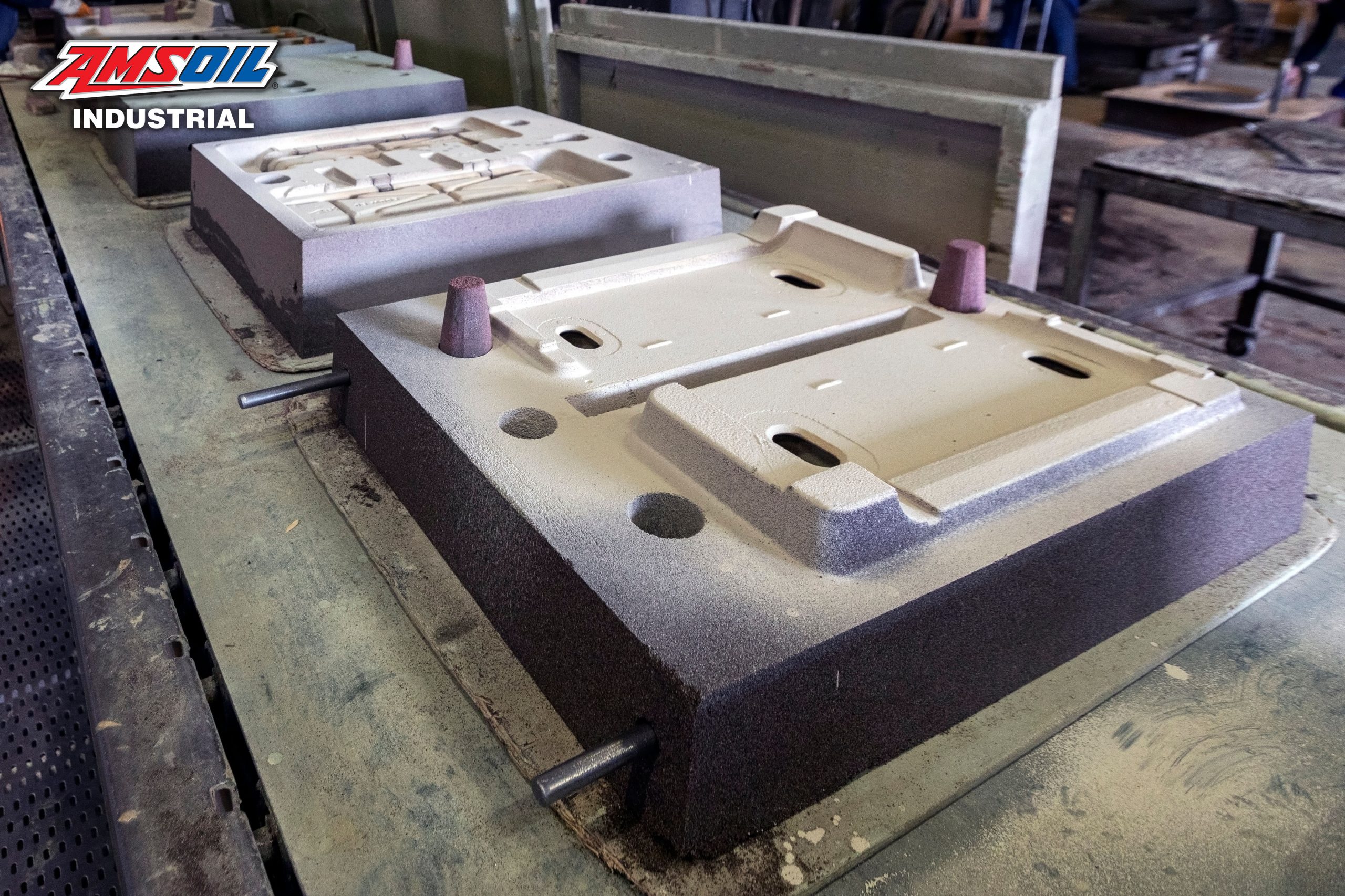
Producing clean, consistent parts improves operational efficiency. Release agents are engineered surface treatments applied to molds, dies or formwork to create a barrier that prevents adhesion and bonding between the tooling and materials during manufacturing. Release agents enable smooth separation of finished parts from the tooling, reducing defects, improving surface finish and extending tooling life. Benefits include:
• Clean part release – Minimizes sticking, tearing and distortion.
• Improved surface finish – Reduces imperfections, stickers, drag marks and residue.
• Longer tool life – Reduces wear and corrosion on expensive dies and molds.
• Faster cycle times – Less cleaning and maintenance between runs.
• Lower scrap rates – More consistent part quality with fewer defects.
Types of Release Agents
Choosing the right release agent depends on the material being processed, the molding environment and performance requirements. There are multiple formulations to meet diverse and specific needs:
Oil-Based
• Simple, cost-effective physical and reactive film barrier.
• Ideal for metal casting, masonry and concrete.
• May require frequent reapplication.
Low-Viscosity-Oil Based
• Faster-drying and effective in high-throughput environments.
• Ideal for precision metal casting and architectural concrete.
• Used for precision molding and complex geometries.
• Provides maximum control over surface finish.
• May contain VOCs and require ventilation.
Common Applications
Release agents are used across a wide range of industries and manufacturing processes.
| Application
|
Purpose
|
|
| Aluminum, Magnesium, Iron and Zinc Casting
|
Prevents molten metal from sticking to dies, improving cooling and part finish. | |
| Plastic & Rubber Injection Molding
|
Reduces buildup and drag marks for efficient part ejection and defect-free demolding. | |
| Fiberglass & Carbon Fiber Composite Molding
|
Superior-quality finishes on aerospace, automotive and marine parts. | |
| Concrete and Precast
|
Prevents bug holes and surface damage with quick and clean removal from formwork. | |
| Thermoforming and Vacuum Forming | Preserves detail and shape during plastic forming. |
Common Selection Criteria
• Material compatibility: Concrete, metal, rubber, plastic, composite, etc.
• Operating temperature: Flash point and thermal stability.
• Environmental and safety factors: Formulation, VOC content, odor, flammability.
• Extended tool life: Protect against wear and corrosion.
• Clean part release: Reduce sticking, tearing and distortion.
• Faster cycle times: Less mold cleaning and maintenance between runs.
• Residue and cleanability: Faster mold maintenance.
• Reduce scrap rates: Consistent part quality.
• Surface finish requirements: Matte, glossy, paintable, weldable.
• Improved surface finish: Minimize imperfections and residue.
Benefits of AMSOIL Industrial Release Agents
Release agents aren’t just “spray and go.” Choosing the right release agent can have a significant impact on productivity, part quality and profitability. AMSOIL Industrial release agents are formulated with advanced wetting agents and corrosion inhibitors. They provide consistent coverage, high thermal stability and minimal residue to improve uptime, reduce scrap and extend mold life.
AMSOIL Industrial Application Engineers work with your team and equipment manufacturers to evaluate process conditions and recommend the right products tailored to your specific performance, safety and compliance needs. Contact us today to get started.
| *Technical properties are general characteristics of the product and not manufacturing specifications. Variations that do not affect product performance should be expected. Product formulations are subject to change without notice. Customers are responsible for determining product suitability for use with their equipment. |